
Working for the federal government comes with a unique set of protections and entitlements designed to ensure fair treatment and safe working conditions. Federal employee rights encompass a broad range of legal protections that shield government workers from discrimination, retaliation, unsafe conditions, and unfair labor practices. Understanding these rights is essential for millions of Americans who serve in federal positions, from entry-level administrative staff to senior officials across numerous agencies. This comprehensive guide explores the fundamental protections available to federal workers and how to exercise these rights effectively in the modern workplace.
Understanding Core Federal Employee Rights
Federal employees enjoy robust protections under multiple statutes and regulations that distinguish their employment from private sector work. These protections create a framework that balances the government’s interest in effective operations with individual worker rights.
Constitutional and Statutory Protections
The foundation of federal employee rights rests on constitutional principles and specific federal statutes. Unlike at-will employees in many private sector positions, federal workers benefit from due process protections that require specific procedures before termination or disciplinary action.
Key statutory protections include:
- Title VII of the Civil Rights Act of 1964, prohibiting discrimination based on race, color, religion, sex, and national origin
- The Age Discrimination in Employment Act (ADEA), protecting workers 40 and older
- The Americans with Disabilities Act (ADA), requiring reasonable accommodations
- The Equal Pay Act, mandating equal compensation for equal work
- The Family and Medical Leave Act (FMLA), providing unpaid leave for qualifying reasons
Federal agencies must adhere to merit system principles that emphasize fair and equitable treatment. These principles prohibit arbitrary personnel actions and require that employment decisions be based on merit after fair consideration.

Anti-Discrimination and Equal Employment Opportunity
Federal employee rights include comprehensive protection against workplace discrimination and harassment. The Equal Employment Opportunity Commission enforces these protections, ensuring federal workers can perform their duties without facing bias or hostile treatment.
Federal law prohibits discrimination based on numerous protected characteristics:
- Race and ethnicity
- Sex, including pregnancy, sexual orientation, and gender identity
- Religion and religious practices
- National origin
- Age (40 and older)
- Disability status
- Genetic information
- Parental status
- Political affiliation (unique to federal employment)
When discrimination occurs, federal employees have specific avenues for filing complaints. The Equal Employment Opportunity (EEO) complaint process provides a structured mechanism for addressing violations, typically requiring initial counseling within 45 days of the discriminatory incident.
Labor Relations and Collective Bargaining Rights
A cornerstone of federal employee rights involves the ability to organize and engage in collective bargaining. The Federal Service Labor-Management Relations Statute (FSLMRS) governs these rights, creating a framework similar to private sector labor law but with important distinctions.
Union Participation and Representation
Federal workers have the explicit right to form, join, or assist labor organizations without fear of retaliation. The Federal Labor Relations Authority statute establishes these protections, which apply to most federal agencies and their employees.
| Right | Description | Limitations |
|---|---|---|
| Union Formation | Create or join employee organizations | Some positions excluded (management, supervisors) |
| Collective Bargaining | Negotiate working conditions | Cannot bargain over wages or certain personnel policies |
| Union Representation | Have union representatives in meetings | Must request representation |
| Strike Protection | Cannot be terminated for union activity | Federal employees cannot legally strike |
The National Labor Relations Board also provides guidance on employee rights to organize and bargain collectively, though its primary jurisdiction covers private sector workers. Federal employees operate under the FLRA framework instead.
Negotiated Grievance Procedures
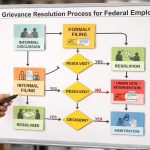
Union-represented federal employees typically have access to negotiated grievance procedures that provide additional due process protections. These procedures allow workers to challenge adverse actions, working conditions disputes, and contract interpretation issues through a formalized system.
Grievance procedures often include multiple steps:
- Informal resolution attempts
- Formal written grievances
- Management review and response
- Arbitration by neutral third parties
Non-represented employees may still access administrative grievance procedures, though these often provide fewer protections than negotiated systems.
Whistleblower Protections and Prohibited Personnel Practices
Federal employee rights include substantial protections for those who report misconduct, waste, fraud, or dangers to public health and safety. These whistleblower protections serve the public interest by encouraging employees to report wrongdoing without fear of retaliation.
Scope of Whistleblower Protections
The Whistleblower Protection Act and subsequent enhancements provide federal employees the right to disclose information they reasonably believe evidences:
- Violations of law, rule, or regulation
- Gross mismanagement or waste of funds
- Abuse of authority
- Substantial and specific danger to public health or safety
The U.S. Office of Special Counsel enforces these protections, investigating allegations of prohibited personnel practices and pursuing corrective action when violations occur.
Protected disclosures can be made to:
- Agency inspectors general
- The Office of Special Counsel
- Congress or congressional committees
- Supervisors or management officials
- Other employees with authority to address the issue
Retaliation against whistleblowers constitutes a prohibited personnel practice. Federal agencies cannot take or threaten adverse actions based on protected disclosures, including termination, demotion, suspension, or harassment.
Prohibited Personnel Practices
Beyond whistleblower retaliation, federal employee rights include protection against various prohibited personnel practices. These violations undermine merit system principles and harm individual workers.
Common prohibited personnel practices include:
- Discrimination based on protected characteristics
- Coercing political activity or demanding political contributions
- Deceiving or obstructing employees from competing for positions
- Influencing employees to withdraw from competition
- Granting unauthorized preference or advantage
- Nepotism in hiring or promotion decisions
- Retaliation for exercising appeal rights
- Taking action based on prohibited information (whistleblowing)
The NAACP Legal Defense Fund identifies key protections available to federal workers, emphasizing these safeguards as essential components of fair employment.
Due Process and Adverse Action Protections
Federal employee rights include procedural protections before agencies can impose significant disciplinary measures. These due process requirements distinguish federal employment from most private sector positions.
Adverse Actions and Required Procedures
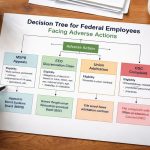
Adverse actions include removals, suspensions of more than 14 days, reductions in grade or pay, and furloughs of 30 days or less. Before implementing such actions, agencies must provide:
- Advance written notice: At least 30 days before the effective date, specifying the charges and evidence
- Opportunity to respond: Time to review materials and provide written and oral responses
- Representation rights: Ability to have an attorney or representative present
- Written decision: Final decision stating specific reasons and supporting evidence
This procedural framework ensures federal employees can contest proposed actions before they take effect, providing meaningful opportunity to present their case.
Appeal Rights and Review Bodies
When agencies impose adverse actions, federal employee rights include multiple avenues for appeal and review. The Merit Systems Protection Board (MSRB) provides the primary forum for challenging adverse actions, offering quasi-judicial hearings before administrative judges.
| Forum | Jurisdiction | Timeline |
|---|---|---|
| MSPB | Adverse actions, reductions in force, retirement issues | 30 days from effective date or receipt |
| EEO Process | Discrimination claims | 45 days for initial counseling |
| Arbitration | Union-negotiated grievances | Per collective bargaining agreement |
| OSC | Prohibited personnel practices | No specific deadline, but prompt filing recommended |
Some claims allow employees to pursue multiple avenues simultaneously or choose between forums, creating strategic considerations in challenging agency actions.
Workplace Safety and Health Rights
Federal employee rights extend to safe and healthy working conditions. The Occupational Safety and Health Administration (OSHA) does not directly cover federal employees, but executive orders and agency-specific programs establish comparable protections.
Safety Standards and Reporting
Federal agencies must establish occupational safety and health programs consistent with OSHA standards. Employees have the right to:
- Work environments free from recognized hazards
- Report unsafe conditions without retaliation
- Request safety inspections
- Access exposure and medical records
- Refuse dangerous work in limited circumstances
When safety concerns arise, federal employees can report issues to agency safety officers, union representatives, or external bodies without fear of reprisal. Retaliation for reporting safety violations constitutes a prohibited personnel practice.
Workers’ Compensation Coverage
The Federal Employees’ Compensation Act (FECA) provides workers’ compensation benefits for federal employees who suffer work-related injuries or illnesses. This coverage includes:
- Medical treatment for work-related conditions
- Compensation for lost wages during recovery
- Vocational rehabilitation services
- Disability benefits for permanent impairments
- Death benefits for survivors of fatal injuries
Filing FECA claims requires prompt notification to supervisors and completion of specific forms within prescribed timeframes. Understanding these requirements helps protect federal employee rights to compensation.
Leave Rights and Work-Life Balance Protections
Federal employees enjoy comprehensive leave benefits and protections that support work-life balance while ensuring job security during absences for qualifying reasons.
Family and Medical Leave
The Family and Medical Leave Act provides federal employees up to 12 weeks of unpaid, job-protected leave annually for:
- Birth or adoption of a child
- Care for immediate family members with serious health conditions
- Employee’s own serious health condition
- Qualifying military family needs
Federal workers may also access annual leave, sick leave, and other paid time off, often more generous than private sector equivalents. Understanding how these benefits interact maximizes available protections.
Reasonable Accommodations
Federal employee rights include reasonable accommodations for disabilities and religious practices. Agencies must engage in an interactive process to identify effective accommodations unless they impose undue hardship.
Common workplace accommodations include:
- Modified work schedules or telework arrangements
- Assistive technology or equipment modifications
- Reassignment to vacant positions
- Leave as an accommodation
- Religious schedule adjustments or dress code exceptions
The accommodation process requires clear communication between employees and agency officials, with documentation supporting the need and proposed solutions.
Pay and Compensation Rights
Federal employee rights encompass fair compensation and transparency in pay-setting processes. The General Schedule (GS) and other pay systems establish standardized compensation frameworks designed to ensure equity.
Equal Pay and Salary Protections
The Equal Pay Act prohibits wage discrimination based on sex for substantially equal work. Federal pay systems incorporate transparency measures that help identify and address disparities.
Pay-setting considerations include:
- Position classification and grade level
- Geographic locality adjustments
- Performance-based increases
- Promotion and advancement opportunities
- Overtime and premium pay eligibility
Federal employees have the right to understand how their compensation is determined and to challenge improper pay decisions through administrative processes.
Overtime and Premium Pay
The Fair Labor Standards Act (FLSA) applies to federal employment with some modifications. Non-exempt federal employees must receive overtime pay at one and one-half times their regular rate for hours worked beyond 40 in a workweek.
Additional premium pay provisions cover night shift differentials, Sunday pay, and hazardous duty compensation. Understanding these entitlements ensures federal employees receive proper compensation for all work performed.
Political Activity and First Amendment Rights
Federal employee rights include political expression protections balanced against restrictions designed to maintain government neutrality. The Hatch Act regulates political activities of federal employees, permitting some activities while prohibiting others.
Permitted Political Activities
Federal employees may:
- Register and vote in any election
- Express opinions about candidates and issues
- Participate in campaigns as off-duty volunteers (with limitations)
- Contribute money to political organizations
- Attend political fundraisers and rallies
- Display political bumper stickers and lawn signs
These rights protect federal employees’ ability to participate in democratic processes as private citizens.
Prohibited Political Activities
To maintain government impartiality, federal employees generally cannot:
- Use official authority to influence elections
- Engage in political activity while on duty or in federal facilities
- Wear partisan clothing at work
- Solicit political contributions from subordinates
- Run for partisan political office (most employees)
Violations of Hatch Act restrictions can result in disciplinary action, including removal. Understanding these boundaries helps federal employees exercise political rights while maintaining compliance.
Privacy Rights and Personnel Records
Federal employee rights include privacy protections for personal information and access to personnel records. The Privacy Act of 1974 restricts how agencies collect, maintain, use, and disseminate personal information about employees.
Access to Personnel Files
Employees have the right to:
- Review their Official Personnel Folder (OPF)
- Request copies of documents
- Dispute inaccurate information
- Submit statements disagreeing with file contents
Regular review of personnel records helps employees identify errors, track career progression, and ensure documentation accuracy. Agencies must maintain specific records and provide access within reasonable timeframes.
Electronic Monitoring and Surveillance
While federal employees have limited privacy expectations in government workplaces, agencies must follow policies regarding electronic monitoring of email, internet use, and phone communications. Notification of monitoring practices is typically required, and surveillance must serve legitimate business purposes.
Federal employees should understand their agency’s monitoring policies and use government technology appropriately, recognizing that work communications may be reviewed or disclosed under certain circumstances.
Training and Development Rights
Federal employee rights include access to training and professional development opportunities. Agencies must provide training necessary for effective job performance and consider employee development needs.
Mandatory Training Requirements
Federal law and regulations require specific training in areas including:
- Ethics and standards of conduct
- Anti-discrimination and harassment prevention
- Cybersecurity and information protection
- Safety procedures and emergency response
- Position-specific technical skills
Agencies must provide this training without cost to employees and during duty hours whenever possible.
Professional Development Opportunities
Federal employees may access various development programs, including leadership training, continuing education, detail assignments, and tuition assistance. Merit system principles encourage employee development and advancement based on capability.
Requesting training opportunities and documenting completed development activities supports career progression and demonstrates commitment to professional growth.
Special Protections for Veterans
Federal employee rights include enhanced protections for veterans through veterans’ preference in hiring and retention. These protections recognize military service while ensuring fair treatment of all qualified candidates.
Veterans’ Preference in Employment Actions
Veterans receive preference in hiring, with disabled veterans receiving additional priority. During reductions in force, veterans receive enhanced retention rights based on service-connected disability ratings and years of service.
These protections extend to:
- Competitive hiring processes
- Retention during workforce reductions
- Restoration rights after military service
- Special appointment authorities
Veterans experiencing violations of their preference rights can file complaints with the Department of Labor’s Veterans’ Employment and Training Service.
Uniformed Services Employment Rights
The Uniformed Services Employment and Reemployment Rights Act (USERRA) protects federal employees who serve in the military, ensuring job restoration rights and protecting against discrimination based on military service. Federal employees on military leave maintain benefits and seniority, with guaranteed reinstatement upon return.
Understanding federal employee rights empowers government workers to recognize protections, challenge violations, and maintain fair working conditions across all federal agencies. Whether you’re facing discrimination, considering whistleblowing, or simply want to understand your workplace protections, having access to comprehensive information makes all the difference. Workplace Fairness provides extensive resources on federal employee rights and broader workplace protections, helping workers navigate complex employment issues and advocate effectively for fair treatment. Explore their materials to learn more about your rights and how to exercise them.