
Every employee in the United States deserves a safe workplace, free from recognized hazards that could cause serious injury or death. The Occupational Safety and Health Administration (OSHA) enforces standards that protect millions of workers across virtually every industry. Understanding your OSHA workers rights empowers you to advocate for safer working conditions, report violations without fear, and hold employers accountable when they fail to meet their legal obligations. These rights form the foundation of workplace safety protections that have saved countless lives since the Occupational Safety and Health Act was signed into law in 1970.
Understanding the Foundation of OSHA Workers Rights
The Occupational Safety and Health Act established a framework that fundamentally changed how American workplaces approach employee safety. This federal legislation created enforceable standards across industries and empowered workers to participate actively in safety programs.

OSHA workers rights extend to nearly all private sector employees and federal government workers. The legislation covers approximately 130 million workers at more than 8 million worksites nationwide. However, certain groups fall outside OSHA’s jurisdiction, including self-employed individuals, immediate family members of farm employers, and workers protected by other federal agencies under different safety statutes.
Core Rights Every Worker Should Know
Federal law grants employees specific protections that employers cannot ignore or diminish. These rights exist regardless of employment status, company size, or industry sector.
Workers have the right to:
- Request an OSHA inspection if they believe hazardous conditions exist
- Receive information and training about workplace hazards in a language they understand
- Review records of work-related injuries and illnesses
- Obtain copies of test results measuring workplace hazards
- Participate in OSHA inspections and speak privately with inspectors
The comprehensive framework of workers’ rights under OSHA ensures that employees can identify dangerous conditions and take action without risking their jobs. This protection represents a cornerstone of modern workplace safety regulations.
Your Right to a Safe and Healthful Workplace
Employers must provide working environments free from recognized hazards that cause or are likely to cause death or serious physical harm. This fundamental obligation, known as the General Duty Clause, applies even when specific OSHA standards do not address a particular hazard.
What Constitutes a Recognized Hazard
A recognized hazard is one that either the employer knew about or should have known about through industry standards, common sense, or previous incidents. Examples include:
- Unguarded machinery with moving parts
- Electrical hazards from damaged wiring or improper grounding
- Chemical exposures exceeding permissible limits
- Fall hazards from unprotected elevated work surfaces
- Inadequate personal protective equipment for job tasks
Employers cannot claim ignorance when hazards are obvious or well-documented within their industry. OSHA workers rights include protection against these dangers through both specific standards and general safety requirements.
Training and Information Requirements
Employers must provide safety training in formats and languages workers understand. This includes initial training for new hires, additional training when new hazards are introduced, and refresher courses to maintain safety awareness.
| Training Type | Requirement | Frequency |
|---|---|---|
| Hazard Communication | Information about chemical hazards | Initial and when new chemicals introduced |
| Personal Protective Equipment | Proper use and maintenance | Before first use and annually |
| Emergency Procedures | Evacuation routes and protocols | Initial and during drills |
| Equipment Operation | Safe use of machinery and tools | Before operation begins |
Documentation of training sessions protects both employers and employees by creating records of compliance and awareness.
Protection Against Retaliation: A Critical Right
One of the most significant OSHA workers rights is protection from employer retaliation when employees exercise their safety rights. Retaliation can take many forms, and federal law prohibits all of them.
Recognizing Unlawful Retaliation
Employers cannot punish workers who report safety concerns, file complaints, or participate in inspections. Prohibited retaliatory actions include:
- Termination or demotion
- Reduction in hours or pay
- Disciplinary actions not applied to other employees
- Threats or intimidation
- Blacklisting with other employers
- Denying overtime or promotions
OSHA’s anti-retaliation provisions extend beyond direct employment actions to include any adverse treatment that might discourage workers from exercising their rights.
The timing of adverse actions often reveals retaliatory intent. When employers take negative action shortly after an employee files a complaint or participates in an inspection, this temporal proximity can establish a connection between protected activity and punishment.
Filing a Retaliation Complaint
Workers who believe they have faced retaliation must act quickly. OSHA requires complaints to be filed within 30 days of the retaliatory action. This tight deadline makes prompt action essential.
The complaint process involves:
- Contacting your nearest OSHA office within 30 days
- Providing details about the protected activity and the retaliatory action
- Submitting any documentation supporting your claim
- Cooperating with OSHA’s investigation
- Awaiting a determination and potential remedies
OSHA investigates retaliation complaints separately from safety violations. If the agency finds merit in your complaint, remedies may include reinstatement, back pay, restoration of benefits, and compensation for damages.

The Right to Request an OSHA Inspection
When workers identify serious hazards, they can request that OSHA inspect their workplace. This right enables employees to trigger federal oversight when employers fail to address dangerous conditions voluntarily.
How to File a Safety Complaint
Employees can submit complaints online, by phone, fax, or mail. While workers can provide their names, OSHA also accepts anonymous complaints, though investigations may be less comprehensive without identifying information.
Effective complaints include specific details:
- Exact location of the hazard within the facility
- Description of the dangerous condition
- Number of employees exposed
- Duration of the hazard’s existence
- Previous reports to management, if any
The more detailed your complaint, the better OSHA can evaluate the situation and prioritize inspection resources. OSHA workers rights include the expectation that serious complaints will receive prompt attention.
What Happens During an Inspection
OSHA compliance officers follow structured procedures during workplace inspections. Understanding this process helps workers participate effectively and ensure thorough investigations.
| Inspection Phase | Activities | Worker Involvement |
|---|---|---|
| Opening Conference | Inspector explains purpose and scope | Worker representative may attend |
| Walkthrough | Physical inspection of workplace | Workers can accompany inspector |
| Documentation Review | Examination of safety records | Workers can provide additional records |
| Employee Interviews | Private discussions with workers | Employees answer questions confidentially |
| Closing Conference | Discussion of findings | Worker representative may attend |
Workers have the right to point out additional hazards during inspections and to speak privately with compliance officers without management present. This confidentiality protects employees from potential retaliation for providing information.
Access to Safety Records and Information
Transparency in workplace safety programs requires that employees access relevant records and data. OSHA workers rights include the ability to review and obtain copies of important safety documentation.
Medical and Exposure Records
Employers must maintain records of employee exposure to toxic substances and harmful physical agents for 30 years. Workers have the right to access their own medical surveillance records and exposure measurements.
These records include:
- Personal air monitoring results
- Biological monitoring data
- Medical examination results
- Material safety data sheets for chemicals
- Training records
Upon request, employers must provide access to records within 15 working days. This timeframe allows companies to locate and compile relevant documentation while preventing indefinite delays.
Injury and Illness Logs
OSHA requires most employers to maintain logs of work-related injuries and illnesses using specific forms. Workers and their representatives can review these logs to identify patterns and recurring hazards.
The OSHA 300 Log summarizes all recordable injuries and illnesses throughout the year. Employers must post an annual summary (Form 300A) in a visible location each February through April, allowing workers to see workplace safety trends.
Access to this information empowers employees to understand the real safety challenges in their workplace and advocate for improvements based on documented evidence rather than anecdotal observations.
Understanding Employer Responsibilities Under OSHA
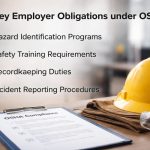
While this article focuses on OSHA workers rights, understanding employer obligations helps employees recognize when companies fail to meet their legal duties. Employer responsibilities under OSHA create the framework within which worker rights operate.
Mandatory Employer Actions
Employers must proactively address workplace safety through multiple channels. Compliance requires ongoing attention rather than one-time efforts.
- Identify and correct hazards through regular inspections and hazard assessments
- Maintain safety equipment and ensure it remains in proper working condition
- Provide required personal protective equipment at no cost to employees
- Display the OSHA poster informing workers of their rights
- Report serious incidents including fatalities within 8 hours and hospitalizations within 24 hours
These obligations exist regardless of whether employees actively assert their rights. Workers who understand these requirements can better identify compliance gaps and request necessary improvements.
When Employers Fall Short
Recognizing employer failures helps workers determine when to exercise their OSHA workers rights through formal channels. Common violations include:
- Failing to provide required safety training
- Ignoring reported hazards without investigation
- Not maintaining required safety records
- Refusing to allow employee participation in safety programs
- Implementing safety policies that discourage injury reporting
When informal requests for correction fail, workers can escalate concerns through OSHA complaints while maintaining their protection against retaliation.
Special Protections for Whistleblowers
Beyond general retaliation protections, certain OSHA workers rights extend to employees who report violations of specific safety and environmental laws. These whistleblower protections cover more than two dozen federal statutes.
Extended Coverage Areas
Whistleblower protections apply when workers report violations related to:
- Airline safety
- Consumer product safety
- Environmental protection
- Food safety
- Healthcare reform
- Nuclear safety
- Pipeline safety
- Transportation safety
Different statutes have varying deadlines for filing complaints, ranging from 30 days to 180 days after the retaliatory action. Workers should verify the specific timeframe applicable to their situation.
Stronger Remedies for Whistleblowers
Some whistleblower statutes provide more comprehensive remedies than standard OSHA retaliation claims. Available relief may include reinstatement, double back pay, compensatory damages, and attorney’s fees.
These enhanced protections recognize that workers who report violations often face severe consequences and need robust legal remedies to make them whole and deter future retaliation.
Rights of Temporary Workers
Temporary workers enjoy the same OSHA workers rights as permanent employees, though confusion about responsibility sometimes leaves these workers vulnerable. Both staffing agencies and host employers share obligations for temporary worker safety.
Dual Responsibility Framework
The host employer (where the work occurs) typically controls the workplace and must ensure compliance with OSHA standards. The staffing agency retains responsibility for certain protections, including retaliation prevention.
Staffing agencies must:
- Inquire about the host employer’s safety record
- Ensure temporary workers receive proper training
- Address worker safety complaints
- Not retaliate against workers who report hazards
Host employers must:
- Treat temporary workers as their own employees for safety purposes
- Provide necessary training and equipment
- Include temporary workers in safety programs
- Maintain injury and illness records
Temporary workers can file complaints against either entity when safety violations occur, and both organizations may be cited for violations.
Making Your Rights Work in Practice
Understanding OSHA workers rights on paper differs from exercising them effectively in real workplace situations. Strategic approaches help workers protect themselves while maintaining employment relationships.
Building Documentation
Keeping detailed records strengthens your position if disputes arise. Document hazards, complaints to management, and any responses or lack thereof.
Effective documentation includes:
- Dates and times of hazard observations
- Photographs or videos when safely obtainable
- Names of witnesses to hazardous conditions
- Written complaints submitted to supervisors
- Management responses or acknowledgments
- Medical treatment for work-related issues
This documentation proves invaluable if you need to file an OSHA complaint or retaliation claim. Contemporary records carry more weight than reconstructed memories.
Working with Safety Committees
Many workplaces have safety committees where workers and management collaborate on hazard identification and prevention. Participating in these committees allows employees to raise concerns through established channels before escalating to OSHA.
Effective safety committee participation involves preparing specific examples, proposing practical solutions, and following up on commitments. When committees fail to address serious hazards, workers have documented evidence of employer awareness when filing external complaints.
Resources and Support for Workers
Numerous organizations provide assistance to workers navigating OSHA workers rights and workplace safety issues. OSHA’s collection of employee rights publications offers detailed guidance on specific topics and industries.
Free Consultation Programs
OSHA’s On-Site Consultation Program helps small and medium-sized employers identify and correct hazards at no cost. While primarily designed for employers, workers benefit when their companies participate in these programs to improve safety conditions.
State consultation programs are separate from enforcement activities, meaning consultants do not issue citations or penalties. This approach encourages employers to seek help without fear of immediate punishment.
Worker Rights Organizations
Various nonprofit organizations specialize in workers’ rights advocacy and can provide guidance beyond what government agencies offer. These groups often assist workers in understanding their options, navigating complaint processes, and connecting with legal resources when needed.
Labor unions also play crucial roles in workplace safety for their members, often negotiating stronger safety protections than minimum legal requirements and providing representation during inspections and investigations.
State Plans and Additional Protections
Twenty-two states and territories operate their own OSHA-approved safety programs, known as State Plans. These jurisdictions must provide protection at least as effective as federal OSHA, though many exceed federal standards.
Enhanced State Requirements
State Plan states often adopt more stringent safety standards or cover additional workers beyond federal OSHA’s jurisdiction. For example, many State Plans cover state and local government employees, who are excluded from federal OSHA protection.
Workers in State Plan states should familiarize themselves with their specific state’s requirements, as procedures for filing complaints and timelines for inspections may differ from federal OSHA processes.
| State Plan Feature | Potential Differences | Impact on Workers |
|---|---|---|
| Standards | May be more protective | Stronger safety requirements |
| Coverage | Often includes public employees | More workers protected |
| Penalties | Can exceed federal amounts | Greater employer deterrence |
| Inspection frequency | May conduct more inspections | Better enforcement |
Understanding whether your state operates under federal OSHA or a State Plan helps you direct complaints to the correct agency and understand the specific protections available in your jurisdiction.
Understanding and exercising your OSHA workers rights creates safer workplaces for everyone while protecting you from retaliation when you speak up about hazards. Whether you need to file a safety complaint, request an inspection, or report employer retaliation, knowing these rights empowers you to take action confidently. For comprehensive information on OSHA workers rights and other workplace protections, Workplace Fairness provides accessible resources and guidance to help you navigate workplace challenges and advocate effectively for your rights.